Healthcare providers across Canada are facing increasing administrative workloads, staff shortages, and growing patient expectations. Clinics are expected to answer calls promptly, schedule appointments efficiently, send reminders, and provide patient support while maintaining high standards of privacy and compliance.
To address these challenges, many healthcare organizations are adopting voice AI Canadian clinics solutions. AI-powered voice agents can automate routine communications, reduce front-desk workload, and improve the patient experience without replacing human healthcare professionals.
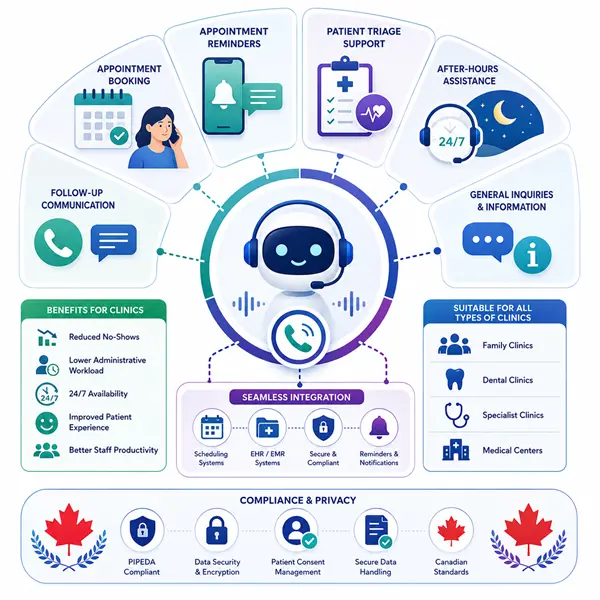
From family practices and specialty clinics to dental offices and medical centers, modern Voice AI technology is helping clinics streamline operations and improve accessibility. Whether it’s appointment scheduling, patient reminders, or basic triage support, healthcare voice AI is becoming an important tool in modern healthcare administration.
This guide explores how voice AI Canadian clinics solutions work, their benefits, common use cases, compliance considerations, and the future of AI-powered patient communication.
Understanding Voice AI in Healthcare
What Is Healthcare Voice AI?
Healthcare voice AI refers to artificial intelligence-powered voice systems designed to communicate with patients through natural conversations over the phone.
Unlike traditional phone menus, Voice AI systems can:
- Understand spoken language
- Answer common questions
- Schedule appointments
- Send reminders
- Route calls appropriately
- Assist with administrative tasks
These capabilities help healthcare organizations improve efficiency while providing better patient service.
Why Canadian Clinics Are Adopting Voice AI
Several factors are driving the adoption of voice AI Canadian clinics solutions.
Increasing Administrative Demands
Clinic staff often spend significant time handling:
- Appointment bookings
- Rescheduling requests
- Reminder calls
- Insurance inquiries
- General patient questions
Automating these tasks allows teams to focus on patient care.
Rising Patient Expectations
Patients increasingly expect the following:
- Faster responses
- Convenient scheduling
- After-hours assistance
- Reduced wait times
Modern clinic AI receptionist systems help meet these expectations.
Core Applications of Voice AI Canadian Clinics
Appointment Booking Automation
Overview
One of the most common applications of voice AI Canadian clinics is appointment scheduling.
How It Works
Patients can call the clinic and simply say the following:
“I’d like to book an appointment next week.”
The AI system can:
- Check availability
- Offer time slots
- Confirm bookings
- Update scheduling systems
Benefits
- Reduced administrative workload
- Faster scheduling
- Improved patient convenience
- Fewer missed opportunities
Many clinics now use a clinic AI receptionist to manage appointment requests 24/7.
Appointment Reminders and Follow-Ups
Why Reminders Matter
Missed appointments can create scheduling gaps and revenue loss.
How Voice AI Helps
AI voice agents can automatically:
- Call patients
- Confirm appointments
- Send reminders
- Process cancellations
- Offer rescheduling options
Benefits
- Lower no-show rates
- Better schedule utilization
- Improved patient communication
This is one of the most effective uses of healthcare voice AI in Canadian clinics.
Patient Triage Support
Overview
Voice AI can assist with basic patient triage by gathering information before patients speak with healthcare professionals.
Common Triage Functions
- Symptom collection
- Appointment prioritization
- Information gathering
- Routing urgent cases
Important Consideration
Voice AI should support administrative triage processes and not replace professional medical diagnosis or emergency care.
Benefits
- Improved efficiency
- Faster patient routing
- Better use of staff resources
This growing application highlights the value of medical AI in healthcare administration.
Clinic AI Receptionist Systems
What Is a Clinic AI Receptionist?
A clinic AI receptionist acts as a virtual front desk assistant capable of managing many routine patient interactions.
Typical Tasks
- Answering calls
- Booking appointments
- Providing office hours
- Explaining services
- Handling cancellations
- Routing calls
Availability Benefits
Unlike traditional reception services, Voice AI can operate:
- After hours
- On weekends
- During holidays
- During peak call periods
This ensures patients receive support even when staff are unavailable.
Healthcare Voice AI for Different Clinic Types
Family Medical Clinics
Common Use Cases
- Appointment booking
- Follow-up reminders
- General inquiries
- Patient intake support
Family practices benefit significantly from voice AI Canadian clinics solutions because of high call volumes.
Dental AI Voice Applications
Growing Adoption in Dentistry
Many dental practices are implementing dental AI voice systems to improve patient communication.
Common Dental AI Voice Functions
- Cleaning appointment bookings
- Treatment consultations
- Reminder calls
- Follow-up scheduling
- Emergency appointment requests
Benefits
- Reduced front-desk workload
- Improved patient experience
- Better appointment management
As patient demand grows, dental AI voice technology is helping practices operate more efficiently.
Specialist Clinics
Typical Applications
- Referral management
- Consultation scheduling
- Follow-up communication
- Patient education support
Voice AI helps specialist clinics handle administrative tasks more effectively.
Benefits of Voice AI Canadian Clinics
Improved Operational Efficiency
Administrative tasks consume valuable staff time.
Voice AI Helps By
- Automating routine calls
- Reducing manual scheduling
- Managing repetitive inquiries
- Streamlining workflows
Result
Staff can focus more on direct patient care.
Enhanced Patient Experience
Patients appreciate:
- Faster responses
- Easy appointment booking
- Convenient communication
- Reduced hold times
A reliable clinic AI receptionist improves overall patient satisfaction.
Cost Management
Voice AI helps clinics manage resources more effectively.
Potential Savings
- Reduced administrative workload
- Improved appointment utilization
- Better staff productivity
These efficiencies contribute to long-term operational improvements.
PIPEDA Compliance and Healthcare Voice AI
Understanding PIPEDA
The Personal Information Protection and Electronic Documents Act (PIPEDA) governs how private-sector organizations handle personal information in Canada.
Healthcare providers using Voice AI must ensure patient data is managed appropriately.
Key Compliance Considerations
Secure Data Handling
Voice AI platforms should implement the following:
- Encryption
- Secure storage
- Controlled access
Patient Consent
Patients should understand how their information is collected and used.
Data Minimization
Only necessary information should be collected and retained.
Vendor Due Diligence
Clinics should evaluate technology providers carefully to ensure compliance standards are maintained.
Why Compliance Matters
Proper compliance helps:
- Protect patient privacy
- Build trust
- Reduce legal risk
- Support responsible AI adoption
Any implementation of medical AI should prioritize privacy and security requirements.
Challenges of Implementing Voice AI
Integration Requirements
Voice AI systems often need to connect with the following:
- Scheduling software
- Practice management systems
- CRM platforms
- Communication tools
Planning integration properly is important for successful deployment.
Staff Adoption
Employees may need training to understand:
- AI capabilities
- Escalation processes
- Workflow adjustments
Successful adoption requires clear communication and planning.
Maintaining Human Oversight
Voice AI works best when combined with human support.
Complex or sensitive situations should be transferred to qualified staff when necessary.
The Future of Medical AI in Canadian Clinics
Increasing Personalization
Future Voice AI systems will provide more personalized patient experiences based on scheduling history and preferences.
Improved Language Support
Canada’s multilingual population creates demand for:
- English support
- French support
- Additional language capabilities
Enhanced language processing will expand accessibility.
Smarter Patient Communication
Future medical AI systems may offer:
- Predictive scheduling
- Personalized reminders
- Enhanced triage workflows
- Better patient engagement tools
These innovations will further strengthen the role of healthcare voice AI in healthcare operations.
Final Thoughts
The adoption of voice AI Canadian clinics solutions is transforming how healthcare providers manage patient communication and administrative workflows. From appointment scheduling and reminders to basic triage support and after-hours call handling, Voice AI helps clinics operate more efficiently while improving the patient experience.
Whether implemented as a clinic AI receptionist, a dental AI voice solution, or a broader healthcare voice AI platform, these technologies help reduce administrative burdens and support more responsive patient care.
As Canadian healthcare organizations continue embracing digital transformation, medical AI will play an increasingly important role in creating accessible, efficient, and patient-focused communication systems while maintaining privacy and compliance standards.
Frequently Asked Questions
1. What is Voice AI for Canadian clinics?
Voice AI is an automated communication system that helps clinics manage bookings, reminders, inquiries, and administrative tasks through natural voice conversations.
2. How does a clinic AI receptionist work?
A clinic AI receptionist answers calls, schedules appointments, provides information, and routes patients to the appropriate services.
3. Is healthcare voice AI replacing clinic staff?
No. Healthcare voice AI is designed to support staff by automating routine administrative tasks, allowing teams to focus on patient care.
4. Can dental practices use dental AI voice technology?
Yes. Many dental clinics use dental AI voice systems for appointment scheduling, reminders, and patient communication.
5. Is Voice AI compliant with Canadian privacy laws?
Voice AI systems can support compliance when implemented properly with appropriate privacy protections and PIPEDA-aligned practices.
6. What are the benefits of medical AI in clinics?
Benefits include improved efficiency, better patient communication, reduced administrative workload, and enhanced appointment management.
7. Can Voice AI handle after-hours calls?
Yes. Voice AI systems can provide support 24/7, including appointment booking and information services outside normal business hours.
8. Which clinics benefit most from voice AI Canadian clinics solutions?
Family practices, dental clinics, specialist clinics, and healthcare centers with high call volumes often benefit significantly.