
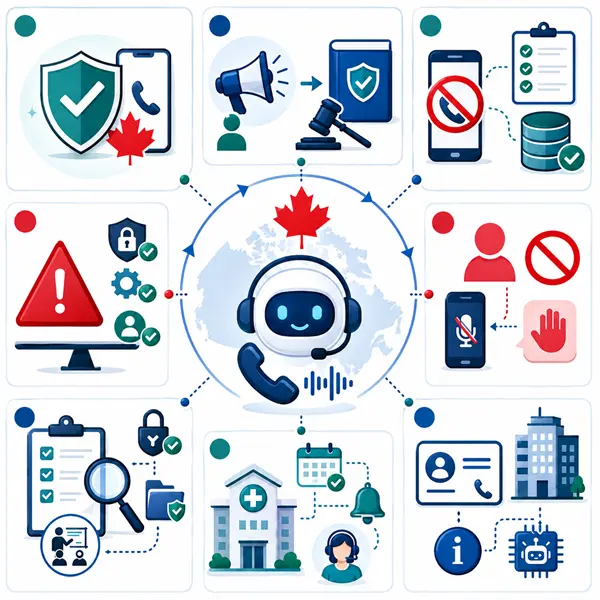
Artificial intelligence is changing how Canadian businesses communicate with customers. From appointment reminders and customer support to lead qualification and virtual receptionists, AI voice technology can improve efficiency and reduce operational costs.
However, businesses using AI-powered calling systems must ensure they comply with regulations established by the Canadian Radio-television and Telecommunications Commission (CRTC).
While Canada does not currently have AI-specific calling legislation, existing telemarketing and telecommunications rules still apply to AI-generated calls.
What Are AI Voice Calls?
AI voice calls use artificial intelligence to interact with people over the phone in a conversational manner.
Businesses commonly use AI voice systems for:
- Appointment reminders
- Customer support
- Virtual receptionists
- Service notifications
- Follow-up calls
- Lead qualification
The legality of these calls depends on their purpose and whether businesses comply with applicable regulations.
Are AI Voice Calls Legal in Canada?
Yes, AI voice calls are legal in Canada.
However, organizations must comply with rules related to:
- Telemarketing activities
- Caller identification
- Consumer consent
- National Do Not Call List (DNCL) requirements
- Opt-out requests
- Permitted calling hours
Using AI does not exempt businesses from compliance obligations.
How Telemarketing Rules Apply to AI Calls
If an AI system is used to promote products, services, or commercial offers, the call may be considered telemarketing.
Examples of Telemarketing Calls
- Promotional offers
- Sales outreach
- Lead generation campaigns
- Marketing messages
Examples of Informational Calls
- Appointment confirmations
- Service updates
- Delivery notifications
- Customer support communications
Businesses should clearly determine the purpose of each campaign before making calls.
DNCL Compliance Requirements
The National Do Not Call List (DNCL) helps Canadians reduce unwanted telemarketing calls.
Businesses using AI for marketing purposes should:
- Check calling lists regularly
- Respect DNCL registrations
- Maintain accurate records
- Follow internal compliance procedures
Failure to comply can lead to complaints and potential penalties.
Internal Do-Not-Call Lists
Organizations must also maintain their own internal do-not-call lists.
If a customer asks not to receive future calls, businesses should:
- Record the request
- Update suppression lists
- Prevent future outreach
This requirement applies to both human agents and AI systems.
Caller Identification Requirements
Consumers should always know who is contacting them.
Businesses should clearly identify:
- Their company name
- The purpose of the call
- Contact information
AI Disclosure
Although not always legally required, informing consumers they are interacting with an AI system is considered a best practice and can help build trust.
AI Voice Calling for Canadian Clinics
Healthcare organizations are among the fastest adopters of voice AI.
Common use cases include:
- Appointment reminders
- Appointment confirmations
- Follow-up calls
- After-hours support
Benefits include:
- Reduced no-show rates
- Improved patient communication
- Lower administrative workload
- Better operational efficiency
Additional Considerations
Clinics should ensure patient information is handled securely and in accordance with privacy requirements.
Best Practices for CRTC Compliance
Businesses using AI voice technology should:
- Verify the purpose of every campaign
- Respect DNCL requirements
- Honor opt-out requests
- Monitor AI conversations
- Maintain compliance records
- Train employees on regulatory obligations
Conclusion
AI voice technology offers significant benefits for Canadian businesses, but compliance remains essential. Organizations must follow CRTC requirements related to telemarketing, caller identification, DNCL compliance, and consumer preferences.
By combining responsible AI use with strong compliance practices, businesses can improve customer communication while minimizing regulatory risk.
Frequently Asked Questions
1. Are AI voice calls legal in Canada?
Yes, provided businesses comply with applicable telecommunications and telemarketing regulations.
2. Does the DNCL apply to AI telemarketing calls?
Yes. AI-powered marketing calls must generally comply with National Do Not Call List requirements.
3. Can clinics use AI for appointment reminders?
Yes. Appointment reminders and confirmations are among the most common uses of voice AI in healthcare.
4. Do businesses need to disclose AI use?
While not always legally required, transparency about AI usage is recommended.
5. What is the biggest compliance risk?
Assuming AI technology is exempt from telemarketing regulations. Businesses remain responsible for compliance regardless of how calls are made.