
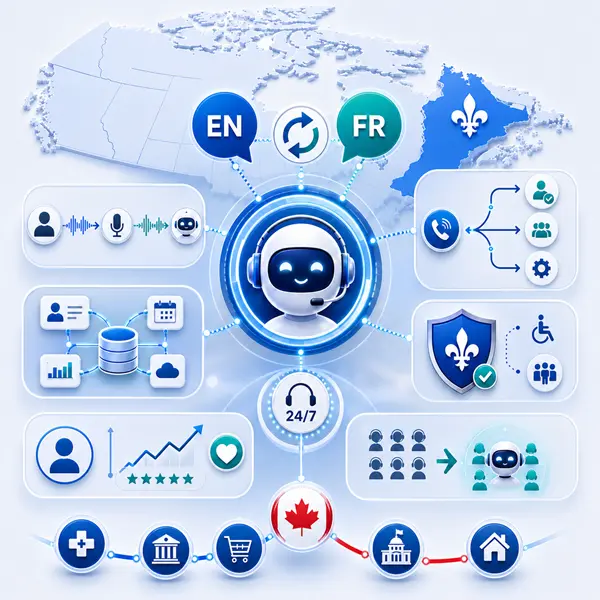
Canada’s multilingual business environment has increased the demand for intelligent communication systems that can serve customers in both English and French. As businesses modernize customer support and workflow automation, bilingual AI voice agents Canada are becoming an essential part of digital communication strategies.
From customer service hotlines to appointment booking systems, businesses now require AI-powered voice systems capable of handling conversations accurately in multiple languages. This demand is especially important in Quebec, where language accessibility and compliance standards continue to evolve.
Modern French voice AI systems allow organizations to provide seamless experiences for both English-speaking and French-speaking callers while improving efficiency and reducing manual workload. At the same time, companies must ensure that their automation systems align with local regulations, including requirements associated with Bill 96 voice compliance.
This guide explores how bilingual voice automation works, the benefits of implementation, compliance considerations, and the growing role of EN FR voice bot systems across Canada.
Our Story & Philosophy Behind Bilingual Voice Automation
Overview
Businesses across Canada are increasingly adopting multilingual AI systems to improve customer accessibility and operational scalability.
Core Philosophy
- Improve communication accessibility
- Support English and French callers equally
- Automate repetitive workflows
- Enhance customer experience
- Maintain compliance standards
Evolution of Voice AI
- Traditional IVR systems
- Speech recognition automation
- AI-powered conversational systems
- Multilingual voice assistants
- Context-aware bilingual automation
Modern Bilingual AI voice agents Canada platforms are designed to create natural and inclusive customer interactions across multiple industries.
What Are Bilingual AI Voice Agents?
Overview
Bilingual AI voice agents are AI-powered conversational systems capable of handling customer interactions in both English and French.
Core Capabilities
- Natural language understanding
- Real-time language switching
- Automated call routing
- Voice recognition in multiple languages
- CRM and workflow integration
How They Work
A caller can begin a conversation in English or French:
- “I’d like to book an appointment.”
or
- “Je voudrais prendre un rendez-vous.”
The AI system identifies the language automatically and continues the interaction accordingly.
Business Impact
- Improved accessibility
- Faster customer service
- Reduced staffing pressure
- Better multilingual support
These systems are becoming a major part of French voice AI adoption in Canada.
Why Canada Needs Bilingual AI Voice Agents
Overview
Canada’s linguistic diversity makes bilingual communication essential for many businesses and public-facing organizations.
Key Reasons
- English and French customer bases
- National accessibility requirements
- Customer experience expectations
- Operational efficiency goals
- Quebec language regulations
Industry Demand
Industries adopting bilingual AI voice agents Canada include:
- Healthcare
- Banking
- Government services
- Retail
- Real estate
- Telecommunications
Core Features of Bilingual AI Voice Agents Canada
Automatic Language Detection
Overview
Modern AI systems can detect whether a caller speaks English or French without requiring manual menu selection.
What It Includes
- Accent recognition
- Natural language processing
- Real-time language identification
- Seamless conversation flow
Business Impact
- Faster interactions
- Reduced caller frustration
- Improved accessibility
This feature is one of the most important advancements in EN FR voice bot technology.
French Voice AI Accuracy
Overview
High-quality French voice AI systems must accurately recognize regional accents, pronunciation, and conversational nuances.
What It Includes
- Quebec French recognition
- Accent adaptability
- Context-aware responses
- Multilingual NLP processing
Business Impact
- Better customer understanding
- Improved response accuracy
- Higher caller satisfaction
Optimization Strategies
- Continuous AI training
- Localized datasets
- Human review processes
- Accent adaptation models
Intelligent Call Routing
Overview
AI voice systems can automatically route callers based on language preference and intent.
What It Includes
- Language-based routing
- Department transfer automation
- Smart escalation workflows
- CRM-based personalization
Business Impact
- Reduced wait times
- Faster problem resolution
- Improved operational efficiency
This functionality is increasingly used in modern Quebec AI voice systems.
Multilingual Workflow Automation
Overview
Bilingual AI systems automate workflows in both English and French environments.
What It Includes
- Appointment scheduling
- FAQ handling
- Payment reminders
- Customer support automation
- Lead qualification
Business Impact
- Reduced operational costs
- Scalable automation
- Consistent multilingual service
Quebec Compliance & Bill 96 Voice Considerations
Overview
Businesses operating in Quebec must consider language compliance regulations when implementing AI-powered communication systems.
What Is Bill 96?
Bill 96 voice compliance relates to updated French language requirements that strengthen the use of French in business communication within Quebec.
Key Compliance Considerations
- French-language accessibility
- Equal service quality in French
- Proper translation accuracy
- Customer communication standards
How AI Voice Systems Help
Modern Quebec AI voice solutions can
- Prioritize French support
- Provide bilingual workflows
- Maintain language consistency
- Improve accessibility compliance
Best Practices
- Use native-quality French voice models
- Ensure accurate translations
- Regularly review AI conversations
- Maintain updated compliance standards
Businesses using bilingual AI voice agents Canada systems should ensure ongoing monitoring for language accuracy and customer experience quality.
Voice AI Applications Across Industries
Healthcare
- Bilingual appointment scheduling
- Patient reminders
- Insurance inquiries
Banking & Finance
- Account support
- Fraud alerts
- Payment reminders
Retail & E-Commerce
- Order tracking
- Customer support
- Return management
Government Services
- Public information hotlines
- Citizen support systems
- Multilingual accessibility
Real Estate
- Property inquiry handling
- Lead qualification
- Viewing confirmations
These growing voice AI applications demonstrate how bilingual automation is expanding across Canada.
Benefits of Bilingual AI Voice Agents Canada
Overview
Businesses implementing bilingual automation systems gain both operational and customer service advantages.
Key Benefits
- 24/7 multilingual support
- Reduced call handling costs
- Faster customer interactions
- Improved customer satisfaction
- Scalable communication systems
Long-Term Value
As customer expectations evolve, bilingual AI voice agents Canada provide a scalable path toward efficient multilingual communication.
Common Challenges in French Voice AI
Overview
Despite rapid improvements, multilingual AI systems still face implementation challenges.
Key Challenges
- Regional accent recognition
- Translation consistency
- Complex conversational context
- Technical integration issues
Recommended Solutions
- Use localized AI training models
- Conduct regular testing
- Combine AI with human oversight
- Optimize datasets continuously
High-quality French voice AI systems require continuous improvement and localization strategies.
Future of EN FR Voice Bot Technology
Overview
The future of multilingual voice automation is becoming increasingly advanced and personalized.
Emerging Trends
- Real-time emotion detection
- Context-aware multilingual AI
- Hyper-personalized conversations
- Improved Quebec French recognition
- AI-human hybrid communication systems
Long-Term Outlook
The adoption of EN FR voice bot systems is expected to increase as businesses prioritize accessibility, automation, and bilingual customer support.
Final Thoughts
The rise of bilingual AI voice agents Canada reflects the growing need for multilingual customer communication across modern businesses. As organizations automate customer support and workflow systems, bilingual voice AI is becoming a key operational advantage.
From improved customer experience to better accessibility and compliance support, modern French voice AI systems help businesses serve diverse audiences more efficiently.
Businesses implementing:
- Multilingual customer support
- AI-powered scheduling
- Bilingual automation workflows
- Quebec-compliant communication systems
They are positioning themselves for long-term scalability and improved customer engagement.
As technology continues to evolve, EN FR voice bot platforms will play an increasingly important role in Canada’s digital communication landscape.
Frequently Asked Questions
Q1. What are bilingual AI voice agents?
They are AI-powered voice systems capable of handling conversations in both English and French.
Q2. Why are bilingual AI systems important in Canada?
Canada has both English-speaking and French-speaking populations, making multilingual communication essential.
Q3. What is French voice AI?
French voice AI refers to AI-powered voice systems designed to understand and respond in French.
Q4. What is Bill 96 voice compliance?
It refers to language accessibility and French communication requirements for businesses operating in Quebec.
Q5. Can EN FR voice bot systems switch languages automatically?
Yes, modern systems can detect and switch languages dynamically during conversations.
Q6. Which industries use Quebec AI voice systems?
Healthcare, banking, government services, retail, and real estate commonly use bilingual AI systems.